Disclaimer:

This blog is not affiliated with, endorsed by, or officially connected to Elton John or his team. It is an independent fan-made blog created solely to share appreciation, research, and historical content about the artist.

Elton John Radio

    Bringing Elton John’s Album Covers to Life - No Sound

    terça-feira, 24 de agosto de 2010

    ...::: MARC BOLAN & T. REX: BORN TO BOOGIE :::...
    The Soundtrack Album

    ...::: MARC BOLAN & T. REX: BORN TO BOOGIE :::...
    The Soundtrack Album


    T. Rex (band)

    From Wikipedia, the free encyclopedia


    . Rex were an English rock band fronted by guitarist, singer and songwriter Marc Bolan. Formed as Tyrannosaurus Rex in 1960s London, the folk rock group's debut album My People Were Fair and Had Sky in Their Hair... But Now They're Content to Wear Stars on Their Brows (1968) reached number 15 in the UK.
    In the 1970s, they achieved mainstream success as a glam rock band with the hits "Get It On", "Ride a White Swan", "20th Century Boy", "Children of the Revolution", "Hot Love", "Telegram Sam" and "Metal Guru". After waning commercial success in the mid-70s, T. Rex ended in 1977 after Bolan was killed in a car accident.
    MORE INFO HERE:


    DISC 1:
    BORN TO BOOGIE
    The Motion Picture Soundtrack


    1. Intro
    2. Jeepster
    3. Baby Strange
    4. Electric Wind - (poem)
    5. Tutti Fruitti - (with Elton John/Ringo Starr)
    6. Children Of The Revolution - (with Elton John/Ringo Starr)
    7. Look To The Left - (with Ringo Starr)
    8. Spaceball Ricochet
    9. Some People Like To Rock - (with Ringo Starr)
    10. Telegram Sam
    11. Some People Like To Roll - (with Ringo Starr)
    12. Cosmic Dancer
    13. They've Come 'Tis Said
    14. Tea Party Medley
    15. Union Hall - (poem)
    16. Hot Love
    17. Get It On
    18. Children Of The Revolution - (reprise)
    19. BBC Interview With Marc Bolan From Late 1971

    ...::: DOWNLOAD :::...

    http://www.megaupload.com/?d=VXH5I7GJ

    DISC 2:
    T. REX IN CONCERT18th March 1972


    1. Rosko's Intro - (with Emperor Rosko)
    2. Cadilac
    3. Jeepster
    4. Baby Strange
    5. Spaceball Ricochet
    6. Girl
    7. Cosmic Dancer
    8. Telegram Sam
    9. Hot Love
    10. Get It On
    11. Just One More - (with Emperor Rosko)
    12. Summertime Blues

    http://www.megaupload.com/?d=I000F6P3


    This DVD finally brings together not only the restored BORN TO BOOGIE, but also a multitude of extras, including two live concerts in which Bolan and his associates are at their peak. It’s interesting to contrast the two performances; in the 5:30 show, the acoustic set is much stronger; in the 8:30 show, the electric stuff is sensational, leading off with a rousing version of CADILLAC. The restoration of the image from 16mm is absolutely first rate; most of the footage was rescued, along with the original stereo recordings, from 100s of rusting film cans in Ringo’s garage. Tony Visconti, who worked with Bolan during his key era, did the remastering of the soundtrack, and it’s absolutely remarkable; no distortion, and great presence. There are also interview extras, a long piece on the restoration of the film, outtakes with Elton John and Ringo during a jam session, and much, much more. As someone who saw T Rex three times in the US (at their first Carnegie Hall gig, which was a triumph, though the audience simply didn’t get it; at the Palladium in NYC on 14th street, where Bolan pleaded with the audience to no avail to “get it on,” and finally at a tragic gig at a dump called The Joint in the Woods in New Jersey, shortly before his untimely death), I’ve always felt that Bolan was severely underrated. Now, here’s the proof in 2005 that T Rex, which during its heyday was responsible for 25% of all record sales in the UK (yes, that’s right), was one of the masters. Buy, enjoy, and play loud. The movie itself is something of a mess, with a number of useless fantasy sequences that don’t come off, but the two concerts more than make up for it; this is rock and roll history, and a copy of this should be an essential in every collection.
    Now you can show everyone what we’ve known for years!5
    Finally! Given T-Rex was under-appreciated in the U.S., I’ve always been asked what Marc Bolan and the boys were all about! Now I can simply play this wonderful 2-disk dvd and show everyone. This is the ultimate for any Bolan fan. The production is beuatiful, the sound is fantastic, and you get many additional extras including an excellent look into the restoration process, interviews with producer Tony Visconti and Marc’s son, Rolan.
    Filmed by Ringo Starr for Apple Films, the DVD includes the original theatrical release of Born to Boogie, as well as full coverage of the 5:30PM and 8:30PM Wembley Pool concerts. The movie has its moments, the highlight being a splendid run through Children of the Revolution in the studio with Elton John and Ringo sitting in. That version is even better than originally released single. I could do without the rest of the surreal fantasy scenes that interrupt the concert footage, but it reflects the same playful strangeness seen in Magical Mystery Tour. Given both concerts are included in their entirety, you lose nothing even though 3 songs from the 8:30 show don’t make the original movie.
    As for the music, it’s absolutely peak T-Rex. As was the norm for 1972, both the early and late shows are 1-hour and have the same set list. Nonetheless, they are markedly different. The 5:30 show is a bit ragged, and Bolan is plagued with microphone problems (he literally has to follow the swaying microphone back and forth while singing Telegram Sam). In addition, Bolan’s guitar is turned too low in the first show and the rest of the band seem a bit stiff. Yet, it still reflects a band at its creative apex (having hit it big with Electric Warrior and completed many tracks for The Slider). The second show is AWESOME and worth the purchase by itself! The band is tight, Marc’s guitar is loud and driving, and the energy exchanged between Bolan and the crowd drives the set forward to increasingly intense musical peaks. I did notice that Tony Visconti (who mixed the DVD) adds some subtle lead guitar lines here and there that are clearly not being played by Marc on stage, but this is not a distraction and there are plenty of true leads played, especially as the late show fires up. The songs are as fresh today as they were in the 1972 days of T-Rexstacy. What’s great is that T-Rex fans get the total live experience they’ve craved for years AND the unfamiliar viewer will finally “get it” and “get it on” with Marc and T-Rex. As an avid fan for over 30 years, I can finally say “I’m satisfied!” You will be too!
    BOLANS HOLY GRAIL5
    Wow..this is awesome!! Currently on vacation here in jolly olde England and just had to buy this DVD !! You will not be disapointed..its the ULTIMATE BOLAN EXPERIENCE !!Whoever put this together deserves a Knighthood..its not just the Born To Boogie movie which has been cleaned up and looks Fab..sounds Fab
    .Us Rexers have seen it a million times on poor VHS or Bootleg..Its the Extras that just blow you away…The 5.30 afternoon concert is Bolan at his best..the colors, sound, energy is unbeleivable.Marc was only 24 when he strutted his stuff and boy does he look likes hes having a blast.I forgot how Beautiful Mickey Finn was..its such a shame that they are no longer here..
    How this film has rotted in a basement for the last 33 years is a crime.Top Hats off to Rolan, Sanctuary, Martin Barden and” all the cats..you know who you are” for having the balls and passion to bring this out for the masses.It must have cost a fortune to clean up and I hope it sells by the truckload.
    I was a Bolan Childe in the 70s and seeing this wonderous 5 hours today brought a tear to my aged eyes..it really was like 1972 again and I hope the star that Marc was/is will still be allowed to shine..big time.
    Thanks Ringo for giving your blessing and especially to Rolan who never got the chance to really know his Father…remember Marc made SO many people happy..as he says in the film.”your’e my People”…pass the kleenex.
    Sorry to ramble but this is the Bolan Holy Grail..so much to see,feel and just be..there are so many jewels in this crown…BUY it ..darken the room,open the champagne and ROCK On..You will not be sorry ..honest..
    Amazon.com
    Marc Bolan had the looks, style, and bearing of rock star, and T. Rex: Born To Boogie offers proof positive that he was just that. But comparing yourself to the Beatles doesn’t make it so, even if you get Ringo Starr to produce, direct, and appear in your movie. In terms of the things that matter, like singing, guitar playing, and songwriting, Bolan (who died in 1977) fell a ways short. He was hugely popular for a year or two; he and his band T. Rex loved to rock, and they had some catchy, riff-based hits, like the infectious “Get it On (Bang a Gong),” performed at length here. Still, image, attitude, and lyrics like “I wanna call ya/I wanna ball ya”) can only get you so far, even in the pop music world. That’s not to say that Born To Boogie isn’t good fun, especially some of the 1972 concert sequences filmed (by Ringo himself) at London’s Wembley arena and a couple of studio jams with Starr and Elton John (on the other hand, the lame filler between live tunes is what happens when nagging details like a story or a script matter less than simply having a stoned good time). And what this handsomely packaged two-disc set has in spades, along with fine, painstakingly-restored sound and picture, is bonus features, including extended concert footage and a couple of good documentaries narrated by Bolan’s son, Rolan. It ain’t deep, but if you’re looking for a good time, you’ve come to the right place. –Sam Graham
    Rolling Stone Magazine, June 2,2005
    Four Stars!

    DVDRIP
    MARC BOLAN & T. REX: BORN TO BOOGIE 
    Información de Descarga
    Formato: 2 DVD9
    Compresión: Winrar (Sin Compresióm)
    Tamaño: 6,01 GB + 7,29 GB
    Registro de recuperación: SI
    Caratula: SI
    Menús: SI
    Passwod:
     rebotes
    Cosmic Rock Documentary
    Re-Born To Boogie Restoration Feature
    T.Rextras Outtakes, Interviews and much more...
    Commentary by Tim Van Rellim and Mark Allen


    Atributos de vídeo:
    Modo de compresión de vídeo: MPEG-2
    Sistema de TV: 625/50 (PAL)
    Relación de aspecto: 16:9
    Resolución de imagen original: 720x576 (625/50)
    Velocidad de fotogramas: 25.00
    Velocidad de bits: 1.88Mbps

    Atributos de audio: 
    Modo de codificación de audio: Dolby Digital
    Velocidad de muestreo: 48kHz
    Número de canales de audio: 5.1, 2.0
    Velocidad de bits: 448 Kbps, 192 Kbps
    Número de secuencias de audio: 5, 2

    Dolby Digital 5.1
    Dolby Digital 2.0 (con narrador o sin narrador)

    Atributo de subimagen:
    Número de subtítulos: 5 (Inlgles, frances, español, italiano, alemán)


    Duración: 02:14:13 + 03:15:31


    DVD1:

    Marc Bolan. Born to Boogie. The Motion Picture
    01. Opening Titles
    02. Jeepster
    03. Baby Strange
    04. "Electric Wind" (poem)
    05. Tutti Frutti (Elton, Ringo & T. Rex)
    06. Children Of The Revolution (Elton, Ringo & T. Rex)
    07. "Look To The Left" (Marc & Ringo)
    08. Spaceball Ricochet
    09. "Some People Like To Rock" (Marc & Ringo)
    10. Telegram Sam
    11. "Some People Like To Roll' (Marc & Ringo)
    12. Cosmic Dancer
    13. "They've Come, This Said"
    14. Tea Party Medley (Marc on acoustic & String Quartet)
    15. "Union Hall" (poem)
    16. Hot Love
    17. Get It On
    18. Children Of The Revolution - Reprise
    19. BBC interview with Marc Bolan from late 1971

    T. Rex In Concert 8.30pm, 18th March 1972, Wembley Evening Concert
    01. Rosko's Intro
    02. Cadilac
    03. Jeepster
    04. Baby Strange
    05. Spaceball Ricochet
    06. Girl
    07. Cosmic Dancer
    08. Telegram Sam
    09. Hot Love
    10. Get It On
    11. Just One More?
    12. Summertime Blues
    13. Credits

    Born To Boogie Original Theatrical Trailer
    Extras
    DOWNLOAD

    http://rapidshare.com/files/373175883/MrBlyTR_BoTBoSE_05_D1_by_rebotes.dlc
    
    http://www.megaupload.com/?d=YFH8664X


    http://s50.radikal.ru/i128/0904/67/c39c16fd4136.jpg


    http://s50.radikal.ru/i128/0904/67/c39c16fd4136.jpg

    DVD2:

    T. Rex In Concert 5.30pm, 18th March 1972, Wembley Afternoon Concert
    01. Rosko's Intro
    02. Cadilac
    03. Jeepster
    04. Baby Strange
    05. Spaceball Ricochet
    06. Girl
    07. Cosmic Dancer
    08. Telegram Sam
    09. Hot Love
    10. Get It On
    11. Just One More?
    12. Summertime Blues ?????
    DOWNLOAD

    http://rapidshare.com/files/373175868/MrBlyTR_BoTBoSE_05_D2_by_rebotes.dlc
    
    http://www.megaupload.com/?d=ZNV49LE8


    MARC BOLAN - Hard rock, glam rock, psychedelic folk, psychedelic rock, pop rock - Years active 1965–1977


    http://luizwoostock.blogspot.com/2010/05/marc-bolan-hard-rock-glam-rock.html


    MARC BOLAN 


    Birth name Mark Feld 
    Born 30 September 1947(1947-09-30)
    Hackney, East London, England 
    Died 16 September 1977 (aged 29)
    Barnes, London, England 
    Genres Hard rock, glam rock, psychedelic folk, psychedelic rock, pop rock 
    Instruments Guitar, vocals, bass, Moog synthesiser, Percussion 
    Years active 1965–1977 
    Labels A&M, EMI, Reprise, Mercury      Associated acts T. Rex, John's Children     Notable instruments: Gibson Les Paul 

    Marc Bolan, nome artístico de Mark Feld (Londres, 30 de Setembro de 1947 — Londres, 16 de Setembro de 1977) foi um cantor e guitarrista britânico. Ele ficou mundialmente conhecido como o vocalista e guitarrista da banda britânica de glam rock T.Rex. 
    Filho de um motorista de caminhão, Bolan cresceu no pós-guerra, Hackney, leste de Londres, no seio de uma família judaica, e mais tarde viveu em Wimbledon, sudoeste de Londres. Ele se apaixonou pelo rock and roll através de músicos como Gene Vincent, Eddie Cochran, Arthur Crudup e Chuck Berry. Ainda em tenra idade tornou-se um Mod, passando a freqüentar bares, cafés e pubs. Ele apareceu em um episódio da série de televisão de Orlando como um figurante Mod. 

    Na idade de nove anos, Bolan recebeu de presente sua primeira guitarra e começou uma banda de skiffle, pouco depois, aos quinze anos, ele deixou a escola "por consentimento mútuo" (foi expulso). Entrou para uma agência de modelos, aparecendo em catálogos de roupas para a lojas de moda masculina, como modelo de ternos, e para os recortes de papelão que eram exibidos nas vitrines das lojas. A revista inglesa "TOWN" o caracterizado como um dos primeiros exemplos do movimento Mod em uma sessão de fotos com um par de outros "rostos". 
    Marc Feld havia mudado seu nome para Toby Tyler quando conheceu e foi morar com o filho ator Allan Warren, que se tornou seu primeiro agente. Warren viu o potencial de Toby Tyler que passavam horas sentado de pernas cruzadas no chão tocando seu violão. Warren, em seguida, levou-o para o fotógrafo Michael McGrath e encomendou uma série de fotografias, contratou um estúdio de gravação e produziu o primeiro registro de Bolan, uma faixa com a canção "Blowing in the wind" de Bob Dylan. Também uma versão de Betty Everett da canção "You're No Good", que mais tarde foi apresentado à EMI para um teste de audição, mas eles recusaram o então Toby Tyler. Warren mais tarde vendeu o contrato de Marc e suas gravações por £200,00 (duzentas libras) para o seu senhorio, o magnata David Kirch, em troca de três meses de aluguel. Kirch estava muito ocupado com seu império imobiliário para fazer qualquer coisa por Bolan. Um ano depois, a mãe de Marc o empurrou para dentro do escritório de Kirch e gritou com ele dizendo que não tinha feito nada por seu filho. Ela pediu para ele rasgar o contrato e de bom grado, ele rasgou. 

    As fitas produzidas durante a sessão de gravação de Toby Tyler desapareceram do pensamento e da mente por mais de vinte e cinco anos até ressurgirem em em 1991 e serem vendidas por cerca de oito mil dólares. Sua eventual libertação em CD em 1993 disponibilizou a primeira gravação conhecida Marc Bolan. 
    Depois de mudar o seu nome novamente para Marc Bolan (via Mark Bowland), enquanto na Decca Records, lançou seu primeiro single, "The Wizard". No início de 1967 seu agente Simon Napier Bell o incluiu no grupo John's Children, que alcançou algum sucesso como uma banda ao vivo, mas vendeu poucos registros. A unica música da John's Children escrito por Marc Bolan, "Desdemona", foi proibido pela BBC porque sua letra tinha o verso polêmico "levante sua saia e [deixe] voar". Seu período com a banda foi breve. 
    Bolan alegou ter passado tempo com um mago em Paris, que supostamente lhe passou conhecimentos secretos e o pode de levitar. O tempo gasto com ele foi muitas vezes aludido, mas permaneceu "mítico", na realidade, o mago foi provavelmente o ator amerciano Riggs O'Hara, com quem Bolan fez uma viagem a Paris em 1965. Pouco tempo depois, sua composição decolou e ele começou a escrever muitas das neo-canções românticas que iriam aparecer em seu primeiro álbum com o duo de folk rock Tyrannosaurus Rex. 
    Electric Warrior, seu sexto álbum de estúdio, é largamente considerado como um dos principais lançamentos do glam rock britânico. Alcançou o número trinta e dois nos EUA, enquanto foi o número um por várias semanas no Reino Unido, tornando-se o álbum mais vendido de 1971. Em 2003, foi classificado com o número 160 na Lista dos 500 melhores álbuns de sempre da Revista Rolling Stone.Após um período de pouca aceitação em meados dos 1970, e o insucesso de critica e venda dos álbuns Tanx e Futuristic Dragon, a banda ressurgiu com o lançamento do disco Dandy in the Underworld de 1977, aclamado pela critica da época. Porém, o final do grupo tornou-se inevitável após a morte de Marc Bolan em um acidente de carro ocorrido em 15 de setembro de 1977.   

    Discografia
    Como Tyrannosaurus Rex 
    My People Were Fair and Had Sky in Their Hair... But Now They're Content to Wear Stars on Their Brows (1968) 
    Prophets, Seers & Sages – The Angels of the Ages (1968) 
    Unicorn (1969) 
    A Beard of Stars (1970) 

    Como T. Rex 
    T. Rex (1970) 
    Electric Warrior (1971) 
    The Slider (1972) 
    Tanx (1973) 
    Zinc Alloy and the Hidden Riders of Tomorrow (1974) 
    Bolan's Zip Gun (1975) 
    Futuristic Dragon (1976) 
    Dandy in the Underworld (1977) 

    Legado 


    Em 1979, Siouxsie and the Banshees lançou um cover "20th Century Boy", como o b-side do single "The Staircase (mistério)". 

    Em dezembro de 1980, "Telegram Sam" foi o quarto single lançado pela banda de rock gótico britânico Bauhaus. O lado A é um cover da música T. Rex 's com o mesmo nome. Foi lançado em 7 de formato e de 12 polegadas, este último com "Rosegarden Funeral de Feridas", como uma faixa extra. The Bongos foram o primeiro grupo americano para cobrir uma melodia T. Rex, "Mambo Sun" e entrar nas paradas da Billboard. Desde então, o vocalista Richard Bongos Barone gravou várias outras composições de Bolan, está trabalhando com o produtor Tony Visconti para o seu próximo álbum solo e tem-se produzido faixas para o filho Rolan Bolan Bolan. 
    Em 1981, Department S lançou um cover de "Solid Gold Easy Action", como o b-side do single "Is Vic lá?". 
    Em 1984, The Replacements lançou um cover de "20th Century Boy" como lado B do single "I Will Dare", que também está incluído na versão de relançamento do álbum Let It Be. Em 1993, Adam Ant (nascido, Stuart Leslie Goddard), a pista coberta ao vivo na edição do disco ao vivo de sua cal Antmusic: The Very Best coleção de Adam Ant. 
    Em 1985, o Duran Duran lasca banda Power Station, com Robert Palmer como vocalista, teve uma versão de "Get It On" no Top 40 britânico, a primeira capa de uma canção Bolan para entrar nas paradas após sua morte. Eles também tocaram a música (com Michael Des Barres substituindo Palmer), no concerto Live Aid E.U.. 
    Em 1986, os Violent Femmes realizado "Children of the Revolution" em seu terceiro álbum The Blind Leading The Naked, para o qual também gravou um videoclipe. 
    Em 1990, Baby Ford fez um cover de "Children of the Revolution" que apareceu no álbum Oooh, O Mundo da Baby Ford. 
    Em 1994, Billy Idol usava uma t-shirt reproduzindo a capa do álbum Slider em seu vídeo de apoio popular a música "Speed". Essa foi uma homenagem clara a Marc Bolan, que ajudou a Geração X para subir no início de sua carreira. 
    Em 2006, Def Leppard lançou o seu álbum Yeah que contém covers de suas bandas favoritas, enquanto crescia, a primeira música deste álbum é "20th Century Boy". Joe Elliott queria cantar "Metal Guru", enquanto Vivian Campbell queria "Telegram Sam", mas acabam concordando com a "20th Century Boy". Não é a primeira vez que Def Leppard tem cantado uma música T. Rex, existe uma versão ao vivo de Get It On. 
    "Children of the Revolution" foi igualmente realizada por Elton John e Pete Doherty no Live 8, 20 anos depois. Bono e Gavin Friday cover "Children of the Revolution" em Moulin Rouge! trilha sonora. 
    Em 2000, Naoki Urasawa criado um mangá intitulado "20th Century Boys", que foi inspirado pela canção de Marc Bolan, o "20th Century Boy". O livro é um vencedor de vários prémios, e acaba de ser lançado nos Estados Unidos através da mídia VIZ. 

    "20th Century Boy" introduziu uma nova geração de devotos ao trabalho Bolan, em 1991, quando foi apresentado em um comercial de TV jeans Levi's com Brad Pitt, e foi re-lançado, alcançando o Top 20 britânico. A canção foi executada pela banda fictícia The Flaming Creatures (realizado por Placebo, repetiu por Placebo e David Bowie em 1999 durante o BRIT Awards) em 1998 filme Velvet Goldmine. Em cada década desde a sua morte, Bolan colocou uma compilação hits no top 20 álbuns do Reino Unido e impulsiona periódicas nas vendas vêm através versões cover de artistas inspirados por Bolan, incluindo Morrissey e Siouxsie and the Banshees. Da mesma forma, "I Love to Boogie" foi brevemente usada em um anúncio de refrigerante Robinson em 2001, trazendo músicas Bolan para uma nova geração. Mitsubishi também trazia "20th Century Boy" em 2002 um carro comercial, levando Hip-O Records para lançar um CD best-of coleção intitulada 20th Century Boy: The Ultimate Collection. 
    Sua música ainda é largamente utilizada em filmes, casos recentes notáveis sendo Breakfast on Pluto, Death Proof, Lords of Dogtown, Billy Elliot, Jarhead, Moulin Rouge!, Herbie: Fully Loaded, quebrando-Up, Hot Fuzz, Click & Escola de Rock . Bolan ainda é citada por muitas bandas guitar-centric como uma influência muito grande (Joy Division / Bernard New Order Sumner disse que o primeiro single que possuía era "Ride a White Swan".) No entanto, ele sempre defendeu que era um poeta que ponha letras de música. As músicas nunca foram tão importantes quanto as palavras. 

    Um legado completo menos bem-vindo para sua família e amigos é a linha contínua sobre a sua fortuna. Bolan tinha arranjado um trust discricionário para proteger o seu dinheiro. Sua morte deixou a fortuna fora do alcance das pessoas mais próximas a ele e sua família e os jornalistas tomaram um interesse ativo em investigar a situação, até agora, com resultado pouco mais do que levar a história para uma maior atenção. Um pequeno fundo separado Jersey-based permitiu que seu filho para receber algum rendimento. No entanto, a maior parte da fortuna de Bolan, diversamente estimado entre £ 20 e £ 30 milhões de libras (aproximadamente US $ 38 - $ 57 milhões), mantém-se na confiança. Em 2007, a família Bolan é suposto ter uma casa paga pela confiança e Rolan é suposto receber um subsídio de.
    Bolan voltou ao topo das paradas do Reino Unido em 2005, quando o hit remasterizado, ampliado Born to Boogie DVD No. 1 nas paradas Music DVD.
    Steve Kilbey - um confesso fã de Marc Bolan e cantor de renome grupo de art-rock australiana The Church - realizado "Bolan's One Inch Rock" no Kilbey Steve Live DVD, lançado em janeiro de 2008. 
    Em 2006, foi revelado que o Patrimônio Inglês recusou-se a comissão de uma placa azul para comemorar Bolan, pois ele acreditava ser de "baixa estatura insuficiente ou significado histórico". Há, no entanto, uma placa dedicada à existente na Bolan sua casa de infância, lá colocadas por Hackney Conselho. 

    Há também duas placas dedicado a sua memória em Golders Green Crematorium no norte de Londres. O segundo a ser exibido foi colocado lá pelo fã clube oficial de Marc Bolan e outros fãs, em setembro de 2002, para comemorar o 25 º aniversário de sua morte. A inscrição na pedra, que também tem sua imagem, lê «25 anos - a sua luz do amor ainda brilha. Colocado sob a placa não é uma figura de cerâmica adequados de um cisne branco. 
    Em 2006, a série de TV Life on Mars, o ator interpreta Marc Bolan, circa 1973, em um bar em Manchester. Tempo de viajar Sam Tyler reconhece ele, tem um momento menino fã, e avisa para ter cuidado de andar em Minis. Na versão americana da série, o personagem é substituída pela de Jim Croce, que morreu mais tarde naquele ano em um acidente de avião, e Sam avisa. No entanto, o T. Rex versão de "Get It On" é jogado no clube de dança de Nova York nessa cena. 
    Uma das guitarras Bolan, uma Gibson Flying V, recentemente apareceu na Antiques Roadshow nas mãos de um colecionador particular. O avaliador estimou o valor da guitarra ser de aproximadamente  $ 50.000-60.000. 
    A escola é planejado em sua homenagem, a ser construído em Serra Leoa: O Marc Bolan Escola de Música e Cinema. 


    segunda-feira, 23 de agosto de 2010

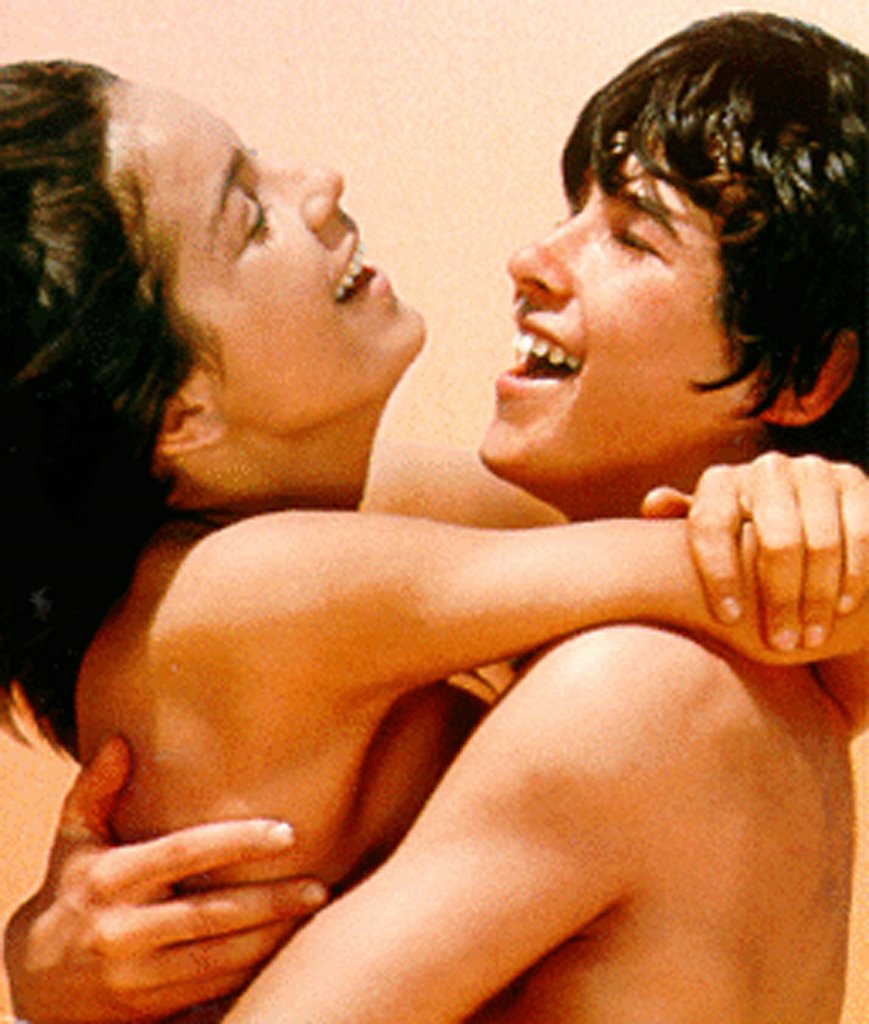
    Elton John Friends The Movie

    "Is Funny How Young Lovers Start As Friends..." 

    Em 1971, Elton John e Bernie Taupin lançaram o álbum Friends, com a trilha sonora do filme homônimo

    Produced and Directed by Lewis Gilbert (UK, 1971)
    Associate Producer: Geoffrey Helman
    Screenplay by Jack Russell and Vernon Harris
    (story by Lewis Gilbert)
    Cinematography by Andréas Winding
    Film Editing by Anne V. Coates
    Music by Paul Buckmaster
    Songs by Elton John and Bernie Taupin
    Nominated for the 1972 Golden Globe of Best Foreign-Film.
    CAST:
    Sean Bury ... Paul Harrison
    Anicée Alvina ... Michelle La Tour
    Ronald Lewis ... Mr. Harrison
    Toby Robins ... Mrs. Gardner
    Joan Hickson ... Lady in bookstore
    Pascale Roberts ... Annie
    Sady Rebbot ... Pierre

    In 1971, a little film by the name of Friends became a huge commercial success around the world. Universally denounced by critics, director Lewis Gilbert's tale of two teenagers in love in the Camargue charmed and delighted untold thousands. The album soundtrack by Elton John and Bernie Taupin also became a hit.
    And those so-called critics probablly didn’t felt the magic of this jewel because they weren’t young anymore. Paul Harrison would say «pauvres idiots», while Michelle Latour would call them «poor silly bastards» with her tender accent.

    The film's greatest strength – apart from Alvina's extraordinary performance and presence (sadly, the actress died two years ago, at only the age of 53) and, to a lesser extent, Bury's – is its evocation of Arcadia, that magic, protected place where life may be lived as the rest of us can only dream. Literature and art has for all time been obsessed with the many forms of Shangri La, but cinema has not been that successful at evoking it (the very artifice feels more like an attempt than a true experience).

    The white cottage and Camargue of Friends is a perfect embodiment of that world – a place where no stranger/adult enters and which even the police cannot track down. This is why, by the end of the movie, they must wait overnight (one assumes in a local village) and return the next morning to the vineyard to await Paul.

    Shot by Andréas Winding, the film is always extremely beautiful to look at (though the David Hamilton-esque patina dates it at times), and thoughtfully directed (the green of nature is kept out until the reverse close-ups of Paul and Michelle during their first meeting). Lewis Gilbert has never been regarded as a particularly inventive or imaginative craftsman, but the clearly personal nature of the material has made his work here unusually sensitive and appropriate.
    The scenes of nakedness and lovemaking, which created some comment at the time, are strikingly natural, never prurient and exploit neither actor. That did not stop several critics from complaining that Alvina is exposed to more explicit nudity than Bury, but this isn't so. The full-frontal of Alvina that set the puritans afire is three-frames long, and a long-shot. What certainly did upset people was Michelle's having a baby outside the hospital system, as if this was somehow irresponsible and unbelievable. But Michelle's mother died during childbirth (presumably in a hospital), and Michelle's desire to have hers somewhere else is totally believable.

    Paul and Michelle are a remarkable cinematic couple, because one always believes in, and is inspired by, their love. Few films have captured the rapture of teenage passion so sweetly; few films have created and held a teenage perspective so honestly. Gilbert has exactly captured Fournier's maxim: «My credo in art and literature is childhood. The thing is to render it without childishness.» One could add: «Nor debase it with adult perspectives.»

    The elegiac world of Paul and Michelle's love may have been attacked from outside, dismantled and lost, but, by the virtue of this tender film, one can constantly return and relive it. And the magic still exist: it gives your youth back again, everytime you look at it.Three years after there was a sequel, called “Paul et Michelle”, but the times have already changed and the actors lost their innocence.
    I saw this little sweet movie when it was released, back in 1971. It’s a film about innocence, the purity of young love and the determination of two young people to make a better life for themselves then they had at home. At the time it was pretty risky to have a movie about a couple of young runaways who successfully setup house and have a baby on their own. Thinking about the values of young people today, I'm not surprised the movie and Elton John's soundtrack are almost unknown nowadays.
    I was then eighteen years old and for the really first time I was deeply in love with a girl of sixteen. That's the reason why I’ve never forgot this movie or the gentle music score signed by Elton & Bernie.

    Friends later made a brief appearance on video (CIC-Taft) and was shown a couple of times on late-night television, but then disappeared without trace. The soundtrack went out of print, and no CD version was ever released. The first hint of revival came in 1992 when Elton John released a two-CD compilation, “Rare Masters” (DJM 514 305-1), which contains all the music (and the original's dialogue snippets: «I meant to do my work today as a lizard sunned itself on a moss-grown rock ...»). A few years later, the film was released on VHS in the US.

    Finally I’ve got it in DVD, after many many years of waiting. The reason of such a delay it’s because the movie wasn’t edited in DVD in the States because of child nudity (!). I think there’s a stupid decree of American Congress that don’t allow individuals under eighteen to be shown having sex on the screen. Or for that matter, even permitted to have sexual thoughts. Nevertheless, you can buy it (Region 2) quick and easily at Galatea Shop, in Ebay.
    A couple of years ago I was lucky enough to receive an email signed by Sean Bury. Unfortunetely that email was lost between some crashes of my computer. But basicly he told me that he enjoyed to know that this little film has crossed the times and won the status of a cult-movie. He told me also that he was living another life, far away from the cinema world. And that he was very happy because his new work had the gift of helping many people around him. Thanks, Sean, for the wonderful person you are and thanks also for being part of this magic movie, which caused so much happiness to so many people around the world.

    «I can't believe that such a small budget film that Anicee and I had the good fortune to make all those years ago, is still receiving your kind attention. Thank you for all your comments, I assure you it was great fun to make "Friends" and an honour to work with Lewis Gilbert who has continued to make some super films.
    I shall always remember Lewis's words after the Preview showing..."Sean" he said as he came up to shake my hand,"you have nothing to be ashamed of !"..(I heaved a sigh of relief)...then he added.. "But nothing to be proud of either!".
    Years of dedicated training as a young actor just went down the pan!I now work with people with special needs , the money is terrible but the smiles are the best! I have been lucky enough to see both of these 2 very different worlds. One feeds upon the attention it seeks and the other is just happy being, and getting on with things quietly, but both are exciting,fun and challenge one to do better. May your gods be with you all !» (Sean Bury in Amazon.com)
    I hope the day will be a lighter highway
    For friends are found on every road
    Can you ever think of any better way
    For the lost and weary travellers to go
    Making friends for the world to see
    Let the people know you got what you need
    With a friend at hand you will see the light
    If your friends are there then everything's all right
    It seems to me a crime that we should age
    These fragile times should never slip us by
    A time you never can or shall erase
    As friends together watch their childhood fly

    ORIGINAL RELEASED AS LP Paramount PAS-6004
    (February 1971)
      Friends


    Friends

    In Search of Lost Time:
    Friends and
    Paul and Michelle

    by Scott Murray


    Scott Murray is a filmmaker, and co-editor of Senses of Cinema.

    In 1971, a little film by the name of Friends became a huge commercial success around the world. Universally denounced by critics, director Lewis Gilbert's tale of two teenagers in love in the Camargue charmed and delighted untold thousands. The album soundtrack by Elton John and Bernie Taupin also became a hit.
    Three years later came Gilbert's sequel, Paul and Michelle, this time with a jazz score by Michel Colombier. However, the times had changed and in Australia the only release the film could muster was as the bottom-half of a double-bill at a few drive-ins.
    Friends later made a brief appearance on video (CIC-Taft) and was shown a couple of times on late-night television, but then disappeared without trace. The soundtrack went out of print, and no CD version was ever released. As for the seemingly unloved Paul and Michelle, there was no Australian video, soundtrack or television screenings.
    The first hint of revival came in 1992 when Elton John released a two-CD compilation, Rare Masters (DJM 514 305-1), which contains all the music (and the original's dialogue snippets: “I meant to do my work today as a lizard sunned itself on a moss-grown rock ...”). A few years later, both films were released on VHS in the US.

    Friends – The Critics

    Apart from critics being totally at odds with the paying audience (1), what is most curious about the incessant critical bagging of Friends is that each new panning appears to be a rehash of someone else's. It is if some god has decreed what the accepted wisdom must be, and all but a few dissidents happily and mindlessly repeat it.
    Take, for example, this 'review' of Friends in Leonard Maltin's Movie and Video Guide:
    BOMB. [...] Yucky early-teen romance about French boy and girl who run off to the seashore, set up housekeeping, and have a baby ... then Mommy and Daddy show up to take them home. (2)
    For one, the boy is English; two, they go to the Camargue, not the seashore; three, there is no Mommy, the boy's mother having abandoned him (and her husband) six years earlier, and the girl's mother having died during childbirth; and, four, at film's end, the boy faces arrest by a police inspector, with not a parent in sight.
    With four major errors in less than three lines, Maltin sets a new standard in critical (in)accuracy. (3)
    The multi-volume Motion Picture Guide, which promotes itself on its high degree of accuracy, fares no better:
    Terrible teenage drama starring [Sean] Bury and [Anicée] Alvina as two unloved French kids who run off together and set up housekeeping on a deserted beach. They have a baby and, shortly afterward, their apologetic parents show up and take them away. (4)
    What is going on here? Is there a parallel universe where a different version of the film is circulating, corresponding to what Maltin and the Motion Picture Guide describe? But, even if there were, could that explain the bizarre doubling-up of words and phrases (“run off”, “set up housekeeping”, “show up” and “take them”)?
    One's worst fears are confirmed when reading the damning TimeOut Film Guide crit. Not only are there such inaccuracies as “all lyrical slow motion” (there is very little in the film) (5), the last word is “Yuck”. (6) How odd that both TimeOut and Maltin should have independently decided that “yuck”/”yucky” was the best way to describe Friends. Perhaps it is the collective unconscious at work.

    The Film

    Paramount. Friends. © 1971 Paramount Pictures Corporation. Locations: Paris, Arles; the Camargue. France. 35mm. 102 mins. (7)
    Director: Lewis Gilbert. Producer: Lewis Gilbert. Associate producer: Geoffrey Helman. Scriptwriters: Jack Russell, Vernon Harris. Based on an original story by Lewis Gilbert. DOP: Andreas Winding. Production designer: Marc Frédérix. Wardrobe: Jeannine Perry. Editor: Anne V. Coates. Music: Elton John. Lyrics: Bernie Taupin. Additional music: Paul Buckmaster. Sound recordist: Jo de Bretagne. Mixer: Gerry Humphreys.
    Cast: Sean Bury (Paul Harrison), Anicée Alvina (Michelle Latour); Ronald Lewis [Robert Harrison (8)], Toby Robins [Jane Gardner], Joan Hickson [Lady in Bookshop], Pascale Roberts [Annie], Sandy Rebbot [Pierre].


    After her father dies, 14-and-a-half-year-old Michelle Latour (Anicée Alvina) travels to Paris to stay with a female cousin. Not only is she made to feel most unwanted, but her cousin's boyfriend makes gross sexual advances towards her in a scene that takes a strongly moralistic attitude to age-different sex. Michelle is half-naked in front of a mirror; the cinematic parallel (unwelcome voyeuristic gaze by mature audience members) is obvious.
    15-year-old Paul Harrison (Sean Bury) is the ignored son of a wealthy English businessman living in Paris. He spends his time skipping language classes and stealing cars for joy rides. At the Parc Zoologique, he meets Michelle.
    A few days later they set off on a day-long escape – an adventure that ultimately lasts for a year and sees them living in Michelle's father's cottage in the remote Camargue, where they create an idyllic existence isolated from the adult world. (9)
    Paul and Michelle fall in love, Michelle becomes pregnant and they decide to have the baby alone at home. At film's end, Paul leaves for work at a local vineyard, unaware the police are waiting there to take him away. (The audience's 'superior' knowledge of the police presence makes Paul and Michelle's last scenes together quite harrowing.)
    The film's greatest strength – apart from Alvina's extraordinary performance and presence (10), and, to a lesser extent, Bury's – is its evocation of Arcadia, that magic, protected place where life may be lived as the rest of us can only dream. Literature and art has for all time been obsessed with the many forms of Shangri La, but cinema has not been that successful at evoking it (the very artifice feels more like an attempt than a true experience).
    This domaine perdu (as Alain-Fournier describes it in Le Grand Meaulnes (11)) is somehow cut off from earthly time and space. Only those specially privileged may enter The Great Good Place (12) and, once departed, it can rarely be refound. The white cottage and Camargue of Friends is a perfect embodiment of that world – a place where no stranger/adult enters and which even the police cannot track down. This is why they must wait overnight (one assumes in a local village) and return the next morning to the vineyard to await Paul. (13)
    Shot by Andreas Winding, the film is always extremely beautiful to look at (though the David Hamilton-esque patina dates it at times), and thoughtfully directed (the green of nature is kept out until the reverse close-ups of Paul and Michelle during their first meeting (14)). Lewis Gilbert has never been regarded as a particularly inventive or imaginative craftsman, but the clearly personal nature of the material (15) has made his work here unusually sensitive and appropriate.
    The scenes of nakedness and lovemaking, which created some comment at the time, are strikingly natural, never prurient and exploit neither actor. That did not stop several critics from complaining that Alvina is exposed to more explicit nudity than Bury, but this isn't so. The full-frontal of Alvina that set the puritans afire (and the Australian censors cut) is three-frames long, and a long-shot.
    Though it would no doubt be banned in ageist Australia today, it is difficult to believe any sane person could rationally object to this delicate portrayal of 1970s teenage sexuality. (16)
    What certainly did upset people was Michelle's having a baby outside the hospital system, as if this was somehow irresponsible and unbelievable. But Michelle's mother died during childbirth (presumably in a hospital), and Michelle's desire to have hers somewhere else is totally believable.

    Friends


    Friends
    As well, girls/women have had babies outside hospitals for most of history; it is a profoundly natural act that only the 20th and 21st centuries have deemed always intervention-necessary. Michelle is 15 at the time, which is a most physiologically appropriate age to give birth. And why shouldn't teenagers happily cut off from a technologically-crazy world not act in a traditional, natural way? It could be argued that Gilbert should have taken his point even further and had Michelle give birth squatting (allegedly the most natural of methods), but Paul and Michelle have read a book on childbirth and this has introduced into their world adult ideas of acceptable delivery.
    For all its 'controversial' material, this is a profoundly moral, indeed deeply Catholic, work. Paul and Michelle see themselves as married because they have exchanged vows to each other (standing in a church alcove while an adult marriage takes place). They also baptise their child, Sylvie, in an otherwise empty church. It is hard to believe they would not be as blessed by any God as those who simply kowtow to the man-made rules of the Pauline church.
    Paul and Michelle are a remarkable cinematic couple, because one always believes in, and is inspired by, their love. Few films have captured the rapture of teenage passion so sweetly; few films have created and held a teenage perspective so honestly. Gilbert has exactly captured Fournier's maxim: “My credo in art and literature is childhood. The thing is to render it without childishness.” (17) One could add: “Nor debase it with adult perspectives.”
    The elegiac world of Paul and Michelle's love may have been attacked from outside, dismantled and lost, but, by the virtue of this tender film, one can constantly return and relive it.


    * * *

    Paul and Michelle – The Critics

    If Leonard Maltin's infelicities regarding Friends were not enough, he is at it again with Paul and Michelle:
    BOMB. [...] further antics of those lovable teeny-boppers have about as much bearing on real life as anything [Keir] Dullea encountered while going through the 2001 space-warp. (18)
    Maltin (19) misses the very point of Paul and Michelle, which takes the characters out of the idyllic Camargue and shoves them into the harsh world of modern Paris. The entire film is about what Maltin presumably sees as “real life” intruding on a romantic dream. (As for what Paul and Michelle has to do with the Kubrick film – or a space-warp! – is anyone's guess.)
    David McGillivray in Monthly Film Bulletin (20) so mangles the film's plot one has to ask if he actually watched it. He makes seven significant errors in his plot synopsis, claiming that: Paul goes to a Parisian school (it is in England); Paul meets Michelle “accidentally” (he has been diligently searching); Paul, Michelle and Sylvie go together to Paris (Paul goes alone, the others following later); Michelle works “in a restaurant and kitchen” (only the kitchen); Michelle discovers she is pregnant in Paris (actually it is in Arles); “her student friends perform a secret abortion” (they are not even remotely her friends); Paul “puts Michelle and Sylvie on a train” (it is Michelle's idea to return to the Camargue, not Paul's). As for describing the white cottage in the Camargue as Michelle and “Paul's old haunt” ...!
    Despite an incapacity to describe Paul and Michelle accurately, that does not stop McGillivray railing against it:
    The suffering is richly melodramatic, with the young things (no longer provocative adolescents) being cut off without a penny, languishing in almost Dickensian squalor [...] (21)
    McGillivray exposes only himself with the “no longer provocative adolescents”, because in Friends Paul and Michelle are in no way provocative to anyone, living as they do in Elysian isolation. As for using the term “Dickensian” to describe lower-middle-class life in Paris, that is simply cultural arrogance.
    Underlining these and many other attacks on Paul and Michelle is an anger that the film was even made. It is as if the critics believe their denunciations of Friends should have been sufficient to ensure no sequel was ever contemplated or made. The fact that no one listens is always the hardest reality for any critic to bear.
    To take but two examples; first Leonard Maltin:
    Why anyone would ever want a sequel to Friends requires an investigation we must take up one of these days [...]
    One can hardly wait!
    Second, David McGillivray:
    Three years after Lewis Gilbert's star-crossed lovers won very few hearts in Friends, the same pair return to suffer anew in this unnecessary sequel.
    This is McGillivray as self-appointed revisionist. The first film was a hit, as McGillivray well knows, and to say “won very few hearts” is disingenuous in the extreme.

    The Film

    Paramount Pictures presents Paul and Michelle. © 1974 Paramount Pictures Corporation. Locations: Paris, Nice; the Camargue. A Franco-British co-production. 35mm. 103 mins. (22) Director: Lewis Gilbert. Producer: Lewis Gilbert. Associate producer: William P. Cartlidge. Scriptwriters: Angela Huth, Vernon Harris. Based on an original story by Lewis Gilbert. DOP: Claude Renoir. Production designer: Pierre Guffroy. Editor: Thelma Connell. Music: Michel Colombier. Songs: “Paul & Michelle”, “Good” (lyrics: Don Black); “Sexy Thing”, “Queen of the Nasties” (music, lyrics: Steve Gilbert). Mixer: Gerry Humphreys.
    Cast: Sean Bury (Paul Harrison), Anicée Alvina (Michelle Latour), Keir Dullea (Gary (23)), Ronald Lewis (Sir Robert Harrison), Catherine Allegret (Joanna), Georges Beller (Daniel), Anne Lonnberg (Susannah), Sara Stout (Sylvie), Steve Gilbert (Nic), Anthony Clark (Hush), Peggy Frankston (Lilli), Peter Graves (Sir Henry), Toby Robins (Jane Harrison), André Maranne (M. Bellancourt), Jenny Arasse (Sister Mercier), Michel Garland (Doctor in Arles), Elizabeth Kaza (Mother Superior), Sylvie Joly (Hotel Receptionist), Alberto Favart (Professor).


    It is three years after Friends, and Paul graduates from an English public school, where he has been effectively locked away by his father.
    Before starting a university course at the Sorbonne, Paul decides to return to France and search for Michelle.
    For those who think Paul has done too little to find Michelle over the three years, in 1974 he would have had no passport separate from his father's and no means of travel from England to France without that parent's consent – a consent that clearly would never have been given. The dialogue between father and son at the start also indicates that Paul deliberately waited until he is old enough to escape his father's clutches.
    Paul finally finds Michelle in Nice. In an odd misjudgement, Lewis Gilbert cuts from a near-wordless embrace (on a pedestrian crossing as car horns blare and traffic whizzes past) to some time later. What did Paul and Michelle say to each other on meeting after three years of separation? What did their eyes seek out and find in each other's?
    This is the same failure of imagination as found in Le Grand Meaulnes, where Alain-Fournier has Augustin Meaulnes and Yvonne de Galais, after having passed each other several times in the woods and gardens of the château, finally meet and talk by the lake. Every reader is on tenterhooks about what they will say to each other, but, after the characters introduce themselves, Fournier opts out and delivers the most infuriating two sentences in all literature: “Et ils parlèrent un instant encore. Ils parlèrent lentement, avec bonheur, – avec amitié.” (“And they spoke a moment more. They spoke slowly, with happiness, – with friendship.”) (24)

    Paul and Michelle


    Paul and Michelle
    What is soon learnt, however, is that Michelle is now living with an American airline employee, Garry (Keir Dullea). In full knowledge of her time with Paul, Garry has taken in both Michelle and her child, Sylvie. The unavoidable emotional tug-of-war begins, with Michelle leaving Garry to return with Paul and Sylvie to the domaine perdu of the white cottage in the Camargue. But the happiness they find there is only on the surface, and dark shadows gather. The varied close-ups of Michelle are unbearably sad, as if she alone senses what will befall them – a fear justified when the 32-year-old Garry arrives by car, penetrating the sanctity of their childhood Eden. One immediately knows much, if not all, is lost.
    Paul then travels alone to Paris to set up home in a tiny attic apartment, in a student quarter filled with drug-taking hippie protesters. (Gilbert unfortunately shows his age in these scenes.) Michelle and Sylvie arrive later, adapting uneasily to the city lifestyle and the demands of supporting a family, which weighs heavily on Michelle and Paul (each working while the other takes turn to mind Sylvie).
    The film is an almost unrelievedly bleak look at the crushing effects of a grey capitalist world on young love (Claude Renoir muting his photographic palette to chilling effect), and ends on yet another separation: Michelle and child returning to the cottage, and Paul staying in Paris to finish his degree. Despite promises of joint holidays and being together in three years' time, they look far more life-defeated than at the end of Friends, and no sequel has ever appeared to suggest that their now-illusive happiness has been regained or separately found. (25)
    This impression is reinforced by the unleavened hand of Gilbert who sets up many negative parallels between the two films: the natural home birth is 'replaced' with an illegal abortion in a hospital; Paul's job in a picturesque vineyard full of wonderfully warm Frenchmen becomes back-breaking toil in an industrial meat-packing plant; and so on. It is almost as if Gilbert is punishing the audience for having believed in the possibility of Friends. (This Catholic-like turnabout is also found in Le Grand Meaulnes and in many other tales of lost domains and loves unregained.) No wonder so few at the time wanted to see his new film (just as many re-readers of Le Grand Meaulnes falter after the première partie, unwilling to face again what follows).
    That said, Paul and Michelle is an always interesting film, even if the story feels unfinished, like a novel where the final chapters have fallen loose. Paul and Michelle's story is too special to not want more ... to not want to return to that most special of places and once again believe that love can overcome all.
    For a moment or two there was only one time, and it was not the present, but that of the domaine perdu, the so impossible to find; yet once found, so impossible to forget. (26)


    © Scott Murray, 2005


    PART 01


    PART 02


    PART 3


    PÁRT 4


    Elton John – Latest News, Updates & Headlines

    Loading news…

    The Illustrated Elton John Timeline

    The Illustrated Elton John Timeline
    This page is part of the project “The Illustrated Elton John Timeline”, an illustrated timeline dedicated to documenting, in chronological and detailed form, the life and career of Elton John, with a strong focus on historical research, preservation, and rare material.

    Guardian

    Loading news…

    Incorrect Information

    Incorrect Information
    All articles on this blog may contain research or information errors. If you notice any, please email robsonvianna2025@gmail.com , indicating the error, the correct reference, and the post in question. The correction will be made with credit to the contributor. Thank you in advance for your collaboration, which is essential for clarifying doubts and enriching the content about Sir Elton John's career. - Robson Vianna

    End Title